Business optimism in markets such as China, the UK and the US has risen markedly over recent months according to the Grant Thornton International Business Report (IBR)[1]. And the most interesting aspect for me is the contribution of the real estate and construction sector to the brightening economic outlook.
I was interviewed last week by CNBC and BBC World News[1] to discuss our Q3 International Business Report (IBR) results. The big surprise was that business optimism in the UK more than doubled over the past quarter.
The Chinese economy is slowing. The days of rampant, double-digit expansion are in the past as we move away from massive investment and export dependency towards a more sustainable, consumption-driven model of growth. This rebalancing offers both challenges and opportunities for dynamic organisations. How these businesses adapt to the changing environment will be key to their growth prospects.
There was some great news for Chile in the latest edition of the Grant Thornton Global Dynamism Index (GDI): we ranked second out of 60 economies, behind only Australia.
According to our Global Dynamism Index (GDI) 2013, Australia is the economy businesses should be looking at. It climbed to the top of the ranking of 60 of the largest economies in the world this year, up from seventh place in 2012.
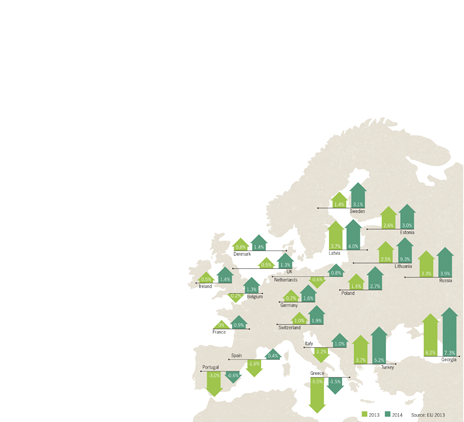
In the second of our Future of Europe series, we look at three aspects of the sovereign debt crisis: the stagnation of the region’s economies, closer integration and the future expansion of Europe.
Presidential elections in some of the world’s largest economies, the sovereign debt crisis and the US fiscal cliff have all contributed to a global sense of economic uncertainty. How are major and developing markets faring in the face of these developments and what does the year ahead have in store?
Last week, we released the results of the Grant Thornton Global Dynamism Index (GDI) 2013. This is the second year we have released these results. We are seeing the beginning of trends in the data but there was also some interesting movement up and down the rankings.
These are the results of the Grant Thornton Global Dynamism Index (GDI) 2013, an annual research project designed by the Economist Intelligence Unit, which ranks the development of the business growth environments of 60 of the world's largest economies over the past 12 months.
Reviewing the Q2 International Business Report (IBR[1]) results, I was pleased to see some good news for construction & real estate companies: Profitability expectations around the world are up. However, my optimism is tempered somewhat by recent news from China and it will be interesting to see how businesses react in Q3.
The brightening outlook for Spain. Rising exports amongst reasons to be optimistic
This time last week I was interviewed by Bloomberg and CNBC to discuss a divergence in business optimism between China and the US revealed by our Q2 International Business Report (IBR). The results were surprising: Chinese business optimism is at an all-time low whilst their US peers are more optimistic than at any time since 2005.
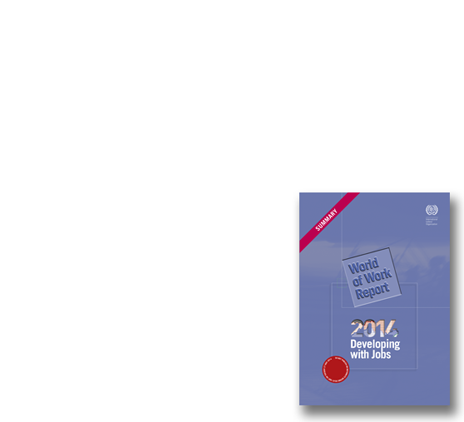
Last week, the International Labour Organisation (ILO) released their annual World of Work report. It contains some stark warnings, particularly for mature economies where it does not expect employment levels to return to pre-crisis levels before 2017. Getting people back into work, the report says, will be a “major global challenge” for years to come and the threat of “social unrest” a major risk.
Writing our recently released Future of Europe report, the thing that stood out to me most was the divergence of business opinion on how to handle the eurozone crisis. And not just between the 17 euro ‘ins’ and the 10 euro ‘outs’ – which you might expect – but a split right at the heart of Europe.
Having been Managing Partner of Grant Thornton Ireland for 9 years, I was naturally drawn to the mixed views of Irish businesses in our 2013 Future of Europe report which we released this week. The report revealed much support for what the euro has achieved, but very little appetite for further integration.
The Q1 IBR economic update contained a major surprise: For the first time, not one of the BRIC economies made it into the top five for business optimism.